When the days get shorter, many people look for ways to feel and look better through the darker months. Red light therapy often comes up, sometimes alongside claims that it can lift mood. That is where it helps to be careful.
The short answer is that red light therapy is a skin-focused LED treatment, not a treatment for seasonal low mood. With consistent use, it may offer subtle improvements in skin appearance, and fall is a sensible time to build that routine because it works best with regular sessions. It is not the same as the bright light box used for seasonal affective disorder. This guide explains the difference and how to plan sessions at Cherry Hill Spa by VouPre in Cherry Hill, NJ.
What Is Red Light Therapy?
Red light therapy uses light-emitting diodes (LEDs) that emit red light and, in some devices, near-infrared light. The light contains no UV rays and is not meant to heat or burn the skin. It is a non-invasive treatment with no downtime.
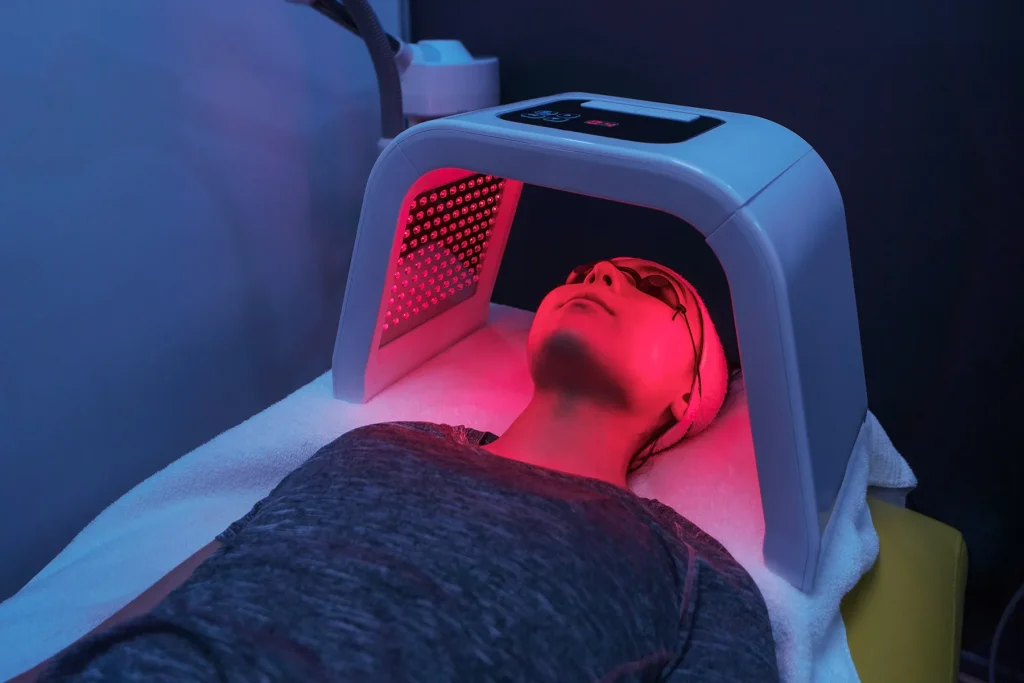
At Cherry Hill Spa by VouPre, a session involves resting near a red light panel for roughly 10 to 20 minutes while wearing protective goggles. The spa recommends 2 to 3 sessions per week for at least 4 weeks to meet skin goals, followed by monthly maintenance. Treatments are personalized, so your provider will tailor the plan after a consultation.
What Can Red Light Therapy Do for Skin?
The American Academy of Dermatology summarizes the research in its guide on red light therapy for skin. Some studies show subtle to noticeable improvements in fine lines, dark spots, rough texture, redness, and loose skin. The AAD also says more research is needed because studies use different devices and protocols, which makes results hard to compare.
Short-term use appears safe, and side effects are usually mild, such as temporary skin irritation. Long-term effects are not yet known. In practice, think of red light as a supportive, gradual treatment rather than a dramatic one. For a deeper look at safety, read our guide on whether red light therapy is safe.
Why Fall Is a Good Time to Build a Routine
Consistency is the biggest factor in red light therapy’s effectiveness, and autumn is a natural time to start. Schedules settle after summer, and a plan of two to three short sessions a week is easier to keep when you are spending more time indoors.
Cooler, drier air can also leave skin looking dull or reactive, so a no-downtime treatment that fits around other care can be convenient. The spa notes that many clients see improvements after roughly eight to 12 sessions, and results vary from person to person.
Red Light Therapy Is Not a Treatment for Seasonal Affective Disorder
The phrase “light therapy” can cause confusion. Seasonal affective disorder (SAD) is a type of depression with a recurring seasonal pattern. The National Institute of Mental Health explains that seasonal affective disorder symptoms usually start in late fall or early winter and ease in spring and summer.
NIMH describes light therapy as a mainstay for winter-pattern SAD, but it refers to a very bright light box rated at about 10,000 lux, used for roughly 30 to 45 minutes daily, usually in the morning, from fall through spring. The page does not discuss red light panels. The two treatments serve different purposes, as the table shows.
| Feature | Red light therapy for skin | Bright light box for SAD |
|---|---|---|
| Main purpose | Cosmetic skin support | Seasonal depression symptoms |
| Type of light | Red, sometimes near-infrared, LEDs | Very bright white light, about 10,000 lux, with UV filtered out |
| Typical use | About 10 to 20 minutes, two to three times weekly at the spa | About 30 to 45 minutes daily, usually in the morning |
| Guidance from | An aesthetics provider | A health care provider |
| Evidence | Subtle skin improvements; more research needed | Long-established for winter-pattern SAD |
If you notice persistent low mood, loss of interest, changes in sleep or appetite, or withdrawal from friends and activities as the days shorten, speak with a doctor or mental health professional. A spa treatment should not replace medical care for those symptoms.
Who Should Check First?
Red light therapy suits many people, but a few situations call for extra care. The AAD advises checking with a dermatologist first if you:
- Have a darker skin tone, since visible light can cause longer-lasting dark spots in some people
- Have a light-sensitive condition, such as lupus
- Take medications that increase light sensitivity or may interact with treatment
- Are using it for hair loss, since many different causes exist
Eye protection matters too. Cherry Hill Spa by VouPre provides protective goggles for every session; wear them as directed.
Professional Sessions vs. At-Home Devices
Red light masks, wands, and panels are widely sold for home use, and quality varies. The AAD notes that effective use requires regular treatment and that prices range widely. The spa says its professional panels deliver more energy and cover a larger area than typical home masks, and it can help you decide whether a professional plan fits your goals and budget.
Professional care also adds a consultation, so your provider can review medications, skin conditions, and expectations before you begin.
How to Plan a Fall Routine
A practical plan has four parts:
- Start with a consultation to review your skin, health history, and goals.
- Commit to a short series of two to three sessions per week for several weeks, as your provider recommends.
- Keep home care simple with a gentle cleanser, moisturizer, and daily sunscreen.
- Move to maintenance once you reach your goals, usually about monthly.
Some clients also combine red light with other treatments. Our guide to red light therapy before or after a facial explains how to sequence the two if you want to pair them.
Red Light Therapy in Cherry Hill, NJ
Cherry Hill Spa by VouPre offers red light therapy inside Cherry Hill Mall on the second floor, next door to Nordstrom. It is an easy stop on a shopping trip or errand run, and the short session length means it can fit into a busy week.
Frequently Asked Questions
Can red light therapy help with the winter blues?
Red light therapy for skin is not a treatment for seasonal affective disorder or other mood conditions. NIMH describes bright light box therapy for SAD, which is a different device and approach. If your mood is affected, talk with a health care professional.
How often should I do red light therapy?
For skin goals, the spa recommends two to three sessions per week for at least four weeks, followed by monthly maintenance. Your provider may adjust the plan for your skin.
Is red light therapy safe?
Short-term use appears safe and side effects are usually mild, according to the AAD. Long-term effects are unknown, and some people should check with a dermatologist first, including those with darker skin tones, light-sensitive conditions or certain medications.
Do I need to wear eye protection?
Yes. Protective goggles shield your eyes from the bright LEDs, and the spa provides them during each session.
Can I combine red light therapy with other treatments?
Often yes, and dermatologists commonly use it alongside other care. Your provider can advise on the best order and timing for your skin.
Book Your Red Light Therapy Consultation at Cherry Hill Spa by VouPre
If you want a simple, no-downtime treatment to support your skin through the darker months, start with a free consultation. The team at Cherry Hill Spa by VouPre will review your goals, explain what red light therapy can and cannot do, and build a schedule that fits your calendar.
Visit us inside Cherry Hill Mall on the second floor, next to Nordstrom, or call 856-382-7838 to book your session.